
Search
Fujifilm closed out 2025 in a big way, heading back to Chicago for another impressive showcase of the latest enterprise imaging solutions at the 2025 Radiological Society of North America (RSNA) Conference & Annual Meeting. Convening nearly 38,000 attendees spanning radiologists, technologists, and industry experts, RSNA is the world’s largest scientific and educational event for medical imaging.
Fujifilm’s RSNA 2025 showcase demonstrated our steadfast commitment to deliver new, innovative enterprise imaging technology that aligns with the needs of our global provider partners, which is comprised of some of the world’s largest health systems and outpatient imaging practices. Bill Lacy, senior vice president, medical informatics global business at FUJIFILM Healthcare Americas Corporation, summed up the experience.
“At this year’s RSNA, we shined a light on the continuous expansion of our Synapse Enterprise Imaging portfolio, and demonstrated the next generation of our cloud-first Synapse PACS with native advanced visualization and artificial intelligence (AI) adoption from imaging analytics to AI-driven workflow.”
This past show marked a record-breaking number of meetings for the medical informatics group. From these meetings, we had the opportunity to learn more about healthcare providers technology goals, challenges, and aspirations for the near future. Read on to learn what we heard the most from attendees who visited our booth:

The COVID-19 pandemic, advances in enterprise imaging workflow technologies, and the mainstreaming of remote work have introduced a new model for the practice of radiology, as well as a new standard for work–life balance for these professionals. An impressive 82% of radiology practices now allow remote work, and 36% of radiologists already work fully remotely1. Nearly half are in a hybrid arrangement, splitting time between home and hospital. Notably, a study conducted by the Journal of the American College of Radiology found that 87% of radiologists who read remotely reported a positive impact on job satisfaction2. Providers who want to attract and retain top talent know they need to adapt this new working model, if they haven’t already.
RSNA attendees were intrigued to demo Fujifilm’s Synapse Viewer eXtension (VX), which is specifically designed to support and optimize remote reading for radiologists. It provides the same high-speed performance and user experience as working on-site at the hospital. Synapse VX also brings the same features, functionalities and workflow speed to providers across geographies and healthcare settings, even when working with large data sets as often seen in mammography.
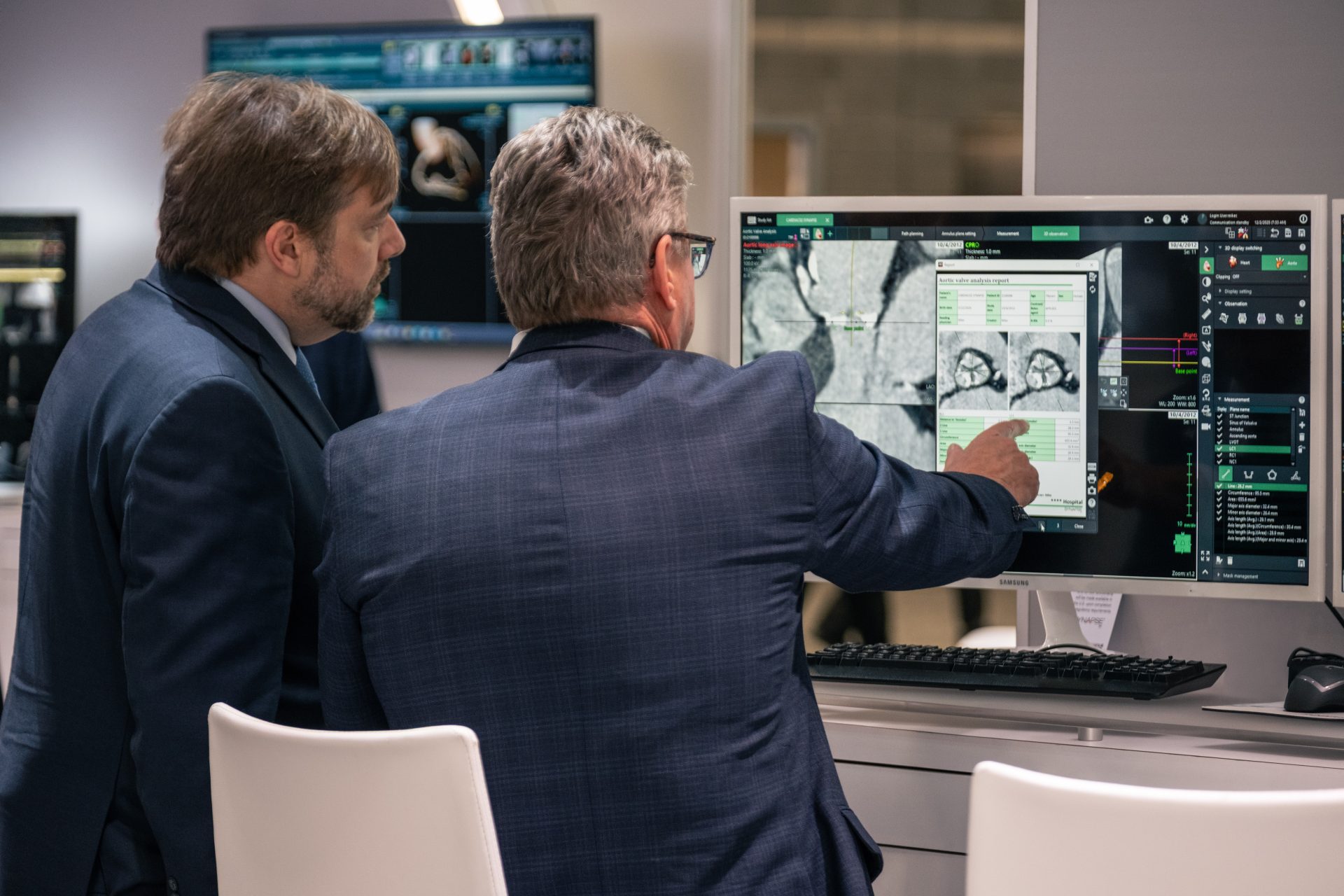
Another hot topic at this year’s meeting was the need for easy application access directly within their enterprise PACS workflows. Embedded PACS applications are crucial in radiology for streamlining workflows, enhancing diagnostic accuracy, improving collaboration, and cutting costs by centralizing data.
Fujifilm’s Synapse PACS, which was available for demo at RSNA, offers advanced visualization sub-tabs to seamlessly render embedded MPR and Fusion 3D functionality directly within the PACS workflow. Synapse PACS’ extensive AI interpretation applications also allow users to choose from more than60 validated algorithms from Fujifilm, third-parties, or homegrown by our customers, and brings those directly into the Synapse PACS workflow via the AI Orchestrator, our open, server-side platform that integrates various AI imaging algorithms.
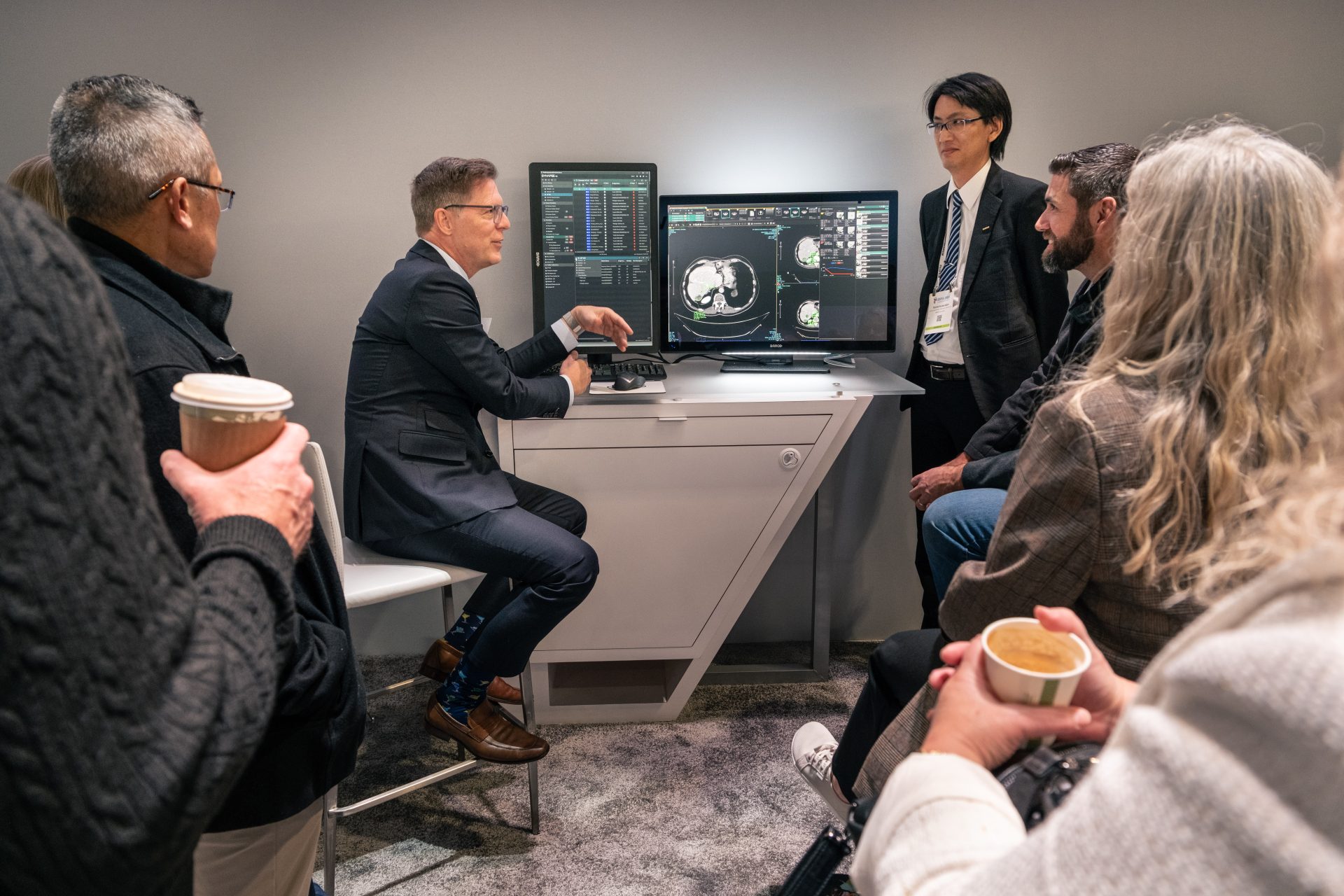
AI in enterprise imaging is helping clinicians by boosting speed and accuracy through automated analysis, prioritizing urgent cases, detecting subtle issues for earlier diagnosis, reducing burnout by handling repetitive tasks, and enabling more personalized treatment plans. Simply put, AI is reshaping the field of medical imaging, and the majority of enterprises are ready to embrace its benefits, if they aren’t already.
At this past RSNA, there was a lot of excitement around our Synapse AI Marketplace, Synapse Worklist Orchestrator and Synapse AI Orchestrator. Fujifilm’s open imaging Synapse Workflow Orchestrator uses an advanced rules engine to seamlessly bring preferred imaging algorithms directly into Synapse PACS workflows. AI Orchestrator and Worklist Orchestrator, Fujifilm’s flexible worklist assignment and AI-driven workload balancing solution, are designed to work together to help balance provider workloads, reduce interpretation times, improve service quality, and reduce clinician burnout. Our most recent Synapse Worklist Orchestrator technology works by automatically assigning diverse studies from a variety of sites based on unique conditions set by an organization with the option to ensure assignment equity across subspecialists, if desired.
Synapse Worklist Orchestrator is a great example of “non-imaging” AI, but what also falls into the non-imaging AI category is reporting, and the need to improve overall workflow efficiencies in the reporting workflow. Our overall AI strategy is to keep ourselves open to AI vendors (proof with over 60 algorithm validations), and this holds true for the reporting piece as well. At RSNA, we were able to demonstrate robust reporting workflows with both Radpair and Rad AI, two of the leading AI reporting algorithms. Visitors walked away with confidence in our overall AI strategy throughout all areas of the diagnostic workflow.
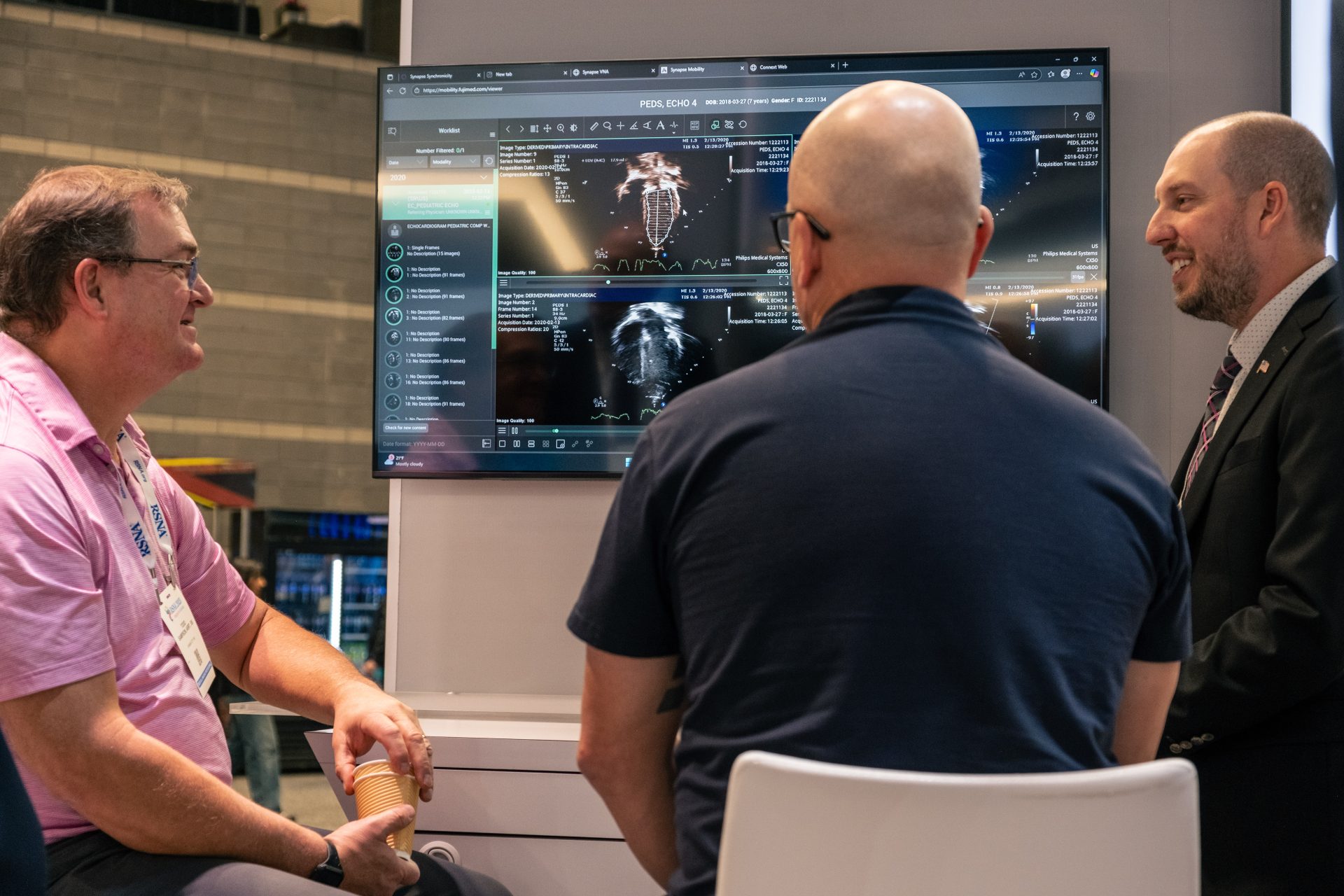
Evolving security threats, legacy system inefficiencies, and soaring data center costs are significant challenges healthcare providers face, which together create operational, financial, and patient safety risks. Many attendees that we met with during RSNA shared that they have ambitious goals to combat these challenges.
An overarching solution to these challenges includes organizations investing in a cloud-native architecture. Native cloud hosting benefits healthcare providers by offering superior scalability, cost efficiency, and agility, enabling secure, real-time data access for better care coordination, AI analytics, remote monitoring, and more. But before providers invest in a cloud-native architecture, it’s vital they do their due diligence in vetting out vendors.
Since 2005, Fujifilm’s cloud services team has helped healthcare facilities protect their data, optimize their infrastructure, and reduce their underlying data storage costs. Our Synapse Enterprise Imaging’s server-rendered design keeps Protected Health Information (PHI) secure at the workstation and supports HIPAA compliance. Multi-factor authentication, customized access limits, encrypted feeds, and industry-leading security also delivers multilayer data protection through our validation with all the industry leading public cloud vendors.
Specifically, our Validated Partner status and collaborative relationship with Amazon Web services (AWS) also allows us to provide new and exciting cloud hosting solutions that improve data accessibility, security, AI utilization and workflows for clinical areas including radiology, cardiology and pathology.
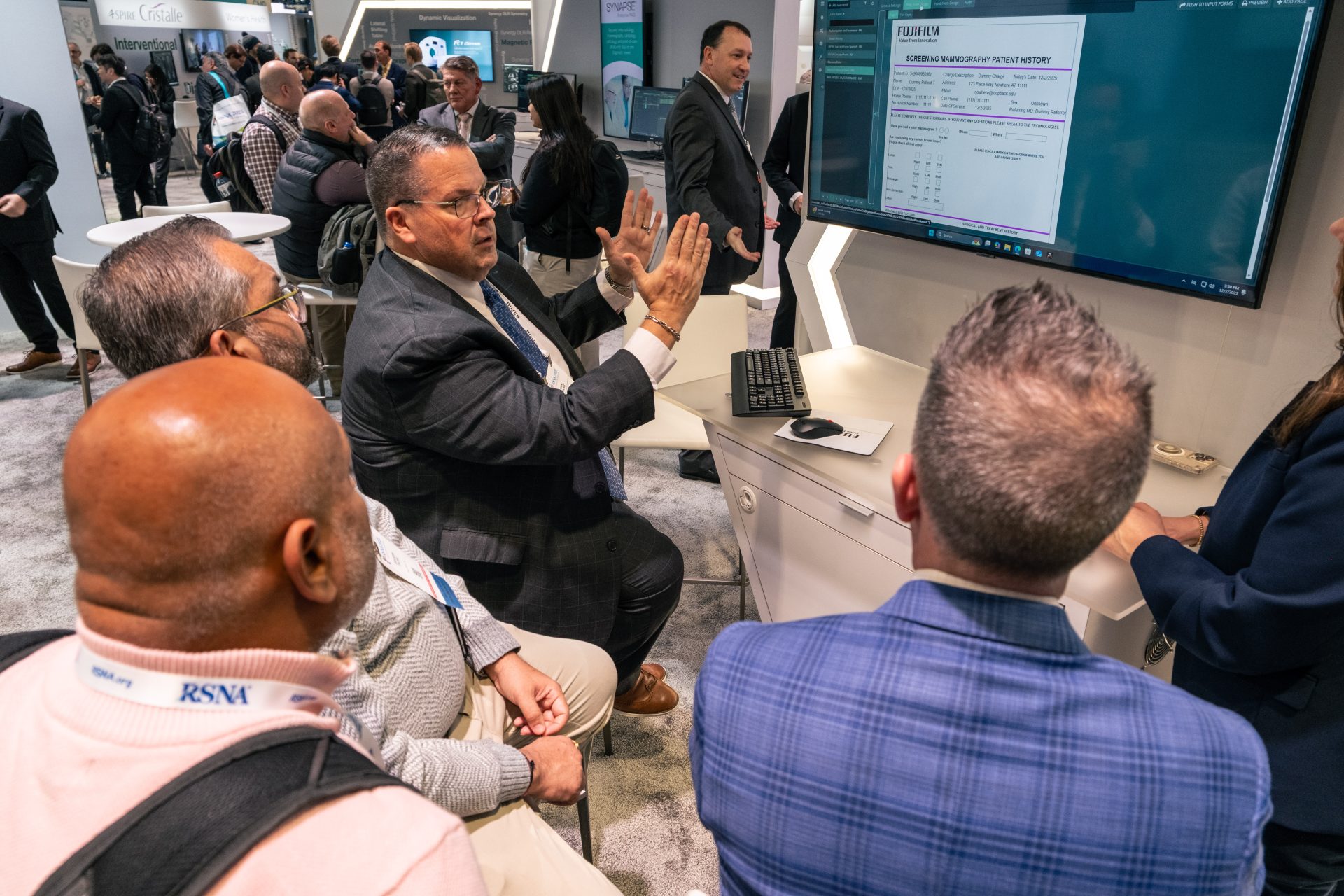
Finally, During the annual meeting, our informatics experts met with a soaring number of outpatient imaging centers. All of them shared a similar need: to lower operational costs, remove data center expenses, and reallocate monetary and personnel resources to focus on revenue cycle management and AI initiatives.
In conjunction with RSNA, Fujifilm announced the launch of Synapse One, a comprehensive, tailor-made workflow solution designed for the unique outpatient imaging needs in North America.
This all-inclusive enterprise imaging solution enables providers to address everything from patient engagement portal, self-scheduling of exams, RIS, advanced scheduling capability, RCM options, PACS, advanced 3D imaging, physician portal, and more, all within the Synapse platform and hosted in the secure Amazon Web Services (AWS) cloud. By consolidating multiple applications into one system, Synapse One lowers operational costs and complexities by eliminating third-party integrations and support contracts while delivering all the robust functionality of Synapse Enterprise Imaging. Providers utilizing Synapse One also remove data center expenses and security concerns by hosting all informatics content in Amazon Web Services’ secure public cloud. Fujifilm’s Bill Lacy stated:
“We wanted to set a high bar with Synapse One and lower current operational spending, while at the same time, deliver a better technology solution and deliver it in a more secure cloud environment. By reducing the current operational spend we also free up dollars our customers can spend on important AI technology, pre-authorization tools, and other modernization initiatives they may have otherwise been holding back on.”
Our medical informatics experts were busy for the duration of RSNA with the Fujifilm booth “buzzing” and had a wonderful time engaging with attendees at this past RSNA. A big thank you to all the healthcare heroes who visited our booth to share their practice’s current challenges, aspirations, and learn about our latest technologies.
RSNA 2025 has set the stage for an exciting year ahead, and we have even more innovation in store. Want to learn more about the innovations we showcased at RSNA? Contact us here to schedule a conversation!